

Elementor One Is a Page Builder No More: Why This “Unified Subscription” Should Worry WordPress Pros
Elementor’s announcement of Elementor One is being framed as “one experience to power it all.” In practice, it reads like a strategic shift away from being a WordPress page builder plugin and toward becoming a subscription SaaS platform that happens to include a builder.
If you build client sites for a living, this matters. The tool you installed to edit layouts is now being positioned as the place you buy hosting, generate AI assets, optimize images, handle transactional email deliverability, monitor performance, and eventually manage fleets of sites. That’s not necessarily “innovation.” It’s consolidation-and consolidation usually comes with a price tag and an exit tax.
From WordPress plugin to “complete infrastructure”
Elementor’s own language makes the direction clear: being a “page builder” was “only the beginning,” and the goal is now “the complete infrastructure to lead the future of the web.” That’s a very different promise than “pixel-perfect pages in WordPress.”
They also repeat the scale argument-Elementor claims it powers over 20 million sites globally (and elsewhere in the same source, over 21 million sites and 13% of the web). Scale is a double-edged sword: when a widely installed plugin turns into a platform, the ripple effects hit a lot of businesses.
The “milestones” show a pattern: the editor was just the entry point
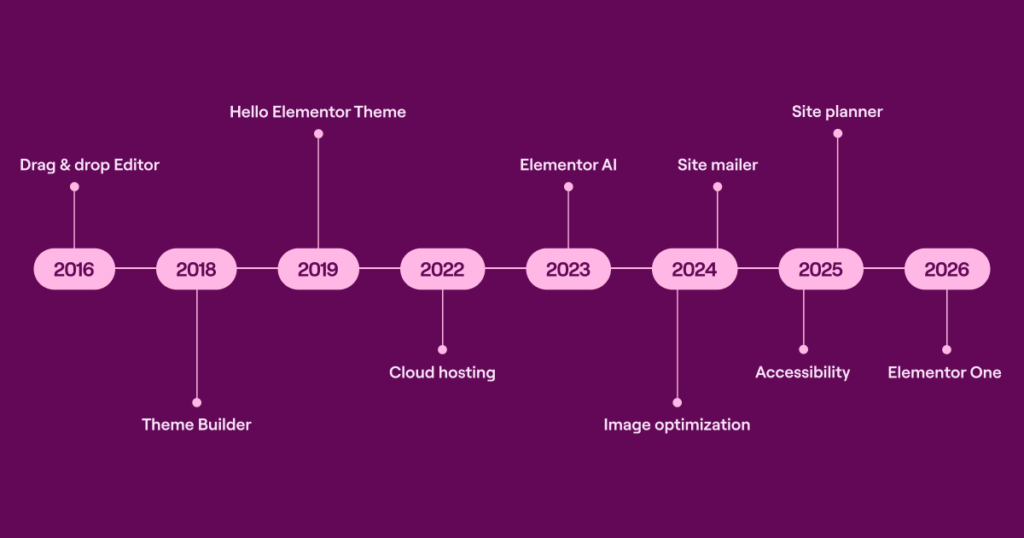
To justify Elementor One, Elementor lists a timeline of product expansion. It’s useful-not as marketing, but as a map of how a builder becomes a suite:
- 2016: Drag & drop Editor – Live drag & drop Editor for creating pixel-perfect websites with advanced design capabilities.
- 2018: Theme Builder – A system for designing headers, footers, and dynamic templates across an entire site.
- 2019: Hello Elementor Theme – A minimalist, lightweight theme framework providing a fast, blank canvas for custom design.
- 2022: Cloud hosting – High-performing, auto-scaling cloud hosting for WordPress.
- 2023: Elementor AI – A native assistant to generate code, layouts, and images directly within the Editor.
- 2024: Image optimization – Image compression that keeps pages fast, for delivering high-speed websites that never compromise on design.
- 2024: Site mailer – Reliable email deliverability tools that ensure transactional emails reach the inbox every time.
- 2025: Accessibility – Scanning and remediation tools that ensure websites are inclusive and compliant by default.
- 2025: Site planner – An AI-powered tool for creating wireframes in minutes based on business goals.
Notice what’s happening after 2022: hosting, AI generation, image optimization, email deliverability, accessibility scanning/remediation, AI wireframing. These are business services. Useful ones, sure-but they’re not “page builder features.” They’re the building blocks of a hosted platform.
Ten years ago, we were a page builder. Today, we are the standard for professional creation on WordPress. Only the leading brand in the ecosystem can make a move this bold – consolidating an entire infrastructure into a single, unified experience. Elementor is 10, but this is just the beginning.
Yoni Luksenberg, CEO of Elementor
Elementor One: “one subscription” is the real product
Elementor One is presented as the “most comprehensive and valuable subscription yet,” bringing “every essential tool” into a single plan across design, AI, performance, and management.
The important part isn’t the menu redesign. It’s the business model: Elementor isn’t selling you features anymore as discrete capabilities in WordPress-it’s selling you a subscription that expands into your stack.
The shared credit pool is classic SaaS monetization
Elementor highlights three reasons why One is “the best choice,” and the first one is the tell:
- Shared pool of credits: Use credits across Elementor’s capabilities with complete flexibility, where you need it, when you need it, keeping your resources aligned with your goals.
- Continuous wealth of value: The value of Elementor One continues to grow over time. As we innovate, new capabilities are added directly to your subscription at no extra cost.
- Expert support when it matters: Get answers and resolve issues fast with priority access to our expert support team. When you’re building for clients, you need a partner that moves as quickly as you do.
A shared credit pool isn’t a user-centric innovation; it’s a pricing strategy. Credits turn features into “consumption,” where you’re effectively paying per use (or per workflow) across AI, optimization, email services, and whatever else is added. It’s flexible, yes-but it also makes costs harder to predict and easier to expand over time.
This is the investor-friendly move: instead of shipping functionality you own via a license, you rent outcomes. When the platform controls the meter, the platform controls the margin.
Elementor One Agency: “unlimited websites” + credits = lock-in at scale
Elementor also introduces Elementor One Agency, described as their “most powerful plan built specifically for scale.” The pitch is straightforward: you can “create, optimize, and manage an unlimited number of websites,” and allocate credits flexibly across your client portfolio.
For agencies, this is exactly how lock-in begins: once your margins depend on pooled credits and your operations depend on a single vendor’s dashboard and services, leaving becomes operationally painful-even if the builder itself could be replaced.
A unified dashboard sounds convenient-until it becomes a walled garden
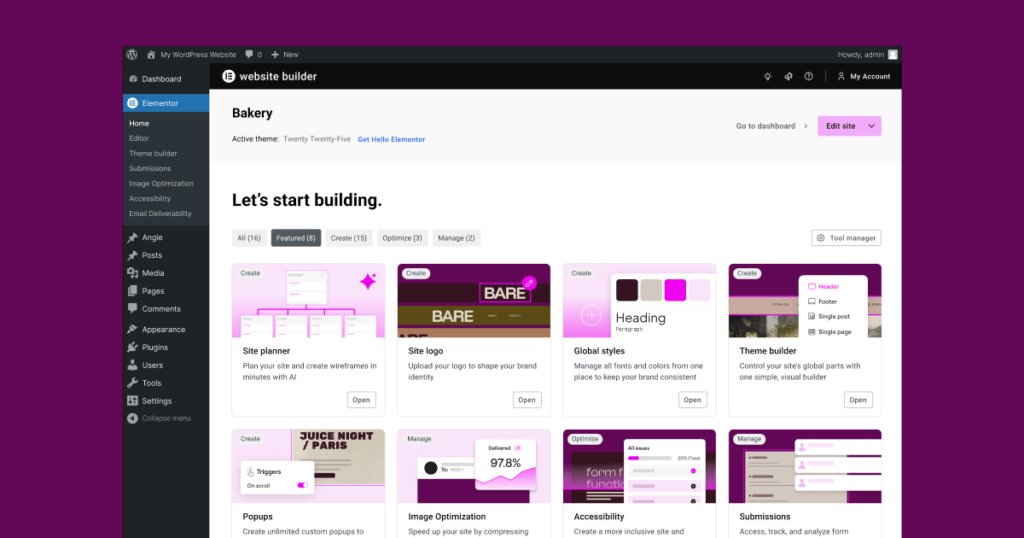
Elementor One consolidates capabilities “into a single, unified menu within your WordPress dashboard,” plus a “new home screen” that merges creation, performance optimization, and site management.
Convenience is real, but it also changes the power dynamic. When a plugin becomes the control plane for your hosting, optimization, mail delivery, AI generation, and management, WordPress turns into an implementation detail. The vendor becomes the product.
Is Elementor building a WordPress.com competitor?
Bundle hosting + builder + site management into “one experience,” and you’re effectively recreating the value proposition of WordPress.com-style managed platforms-just with Elementor branding and an Elementor-centric workflow.
The uncomfortable question for the WordPress ecosystem is whether this is still “Elementor + WordPress,” or whether WordPress is becoming the substrate for Elementor’s proprietary platform. If the long-term incentive is to reduce dependency on WordPress (and WordPress plugin distribution constraints), the business logic points toward an increasingly closed ecosystem.
“Coming soon” features push even deeper into platform territory
Elementor lists upcoming additions that extend the platform perimeter further:
- Cookie Consent – a privacy solution that manages user consent without external scripts.
- Manage – a centralized hub for monitoring website performance and executing bulk updates across multiple sites from a single dashboard.
Cookie consent tooling and multi-site management are not small add-ons. They are governance and operations features-exactly what platforms use to become the default layer you can’t easily remove.
AI everywhere: inside the editor, and across the “native AI layer”
Elementor says it’s expanding AI in multiple directions:
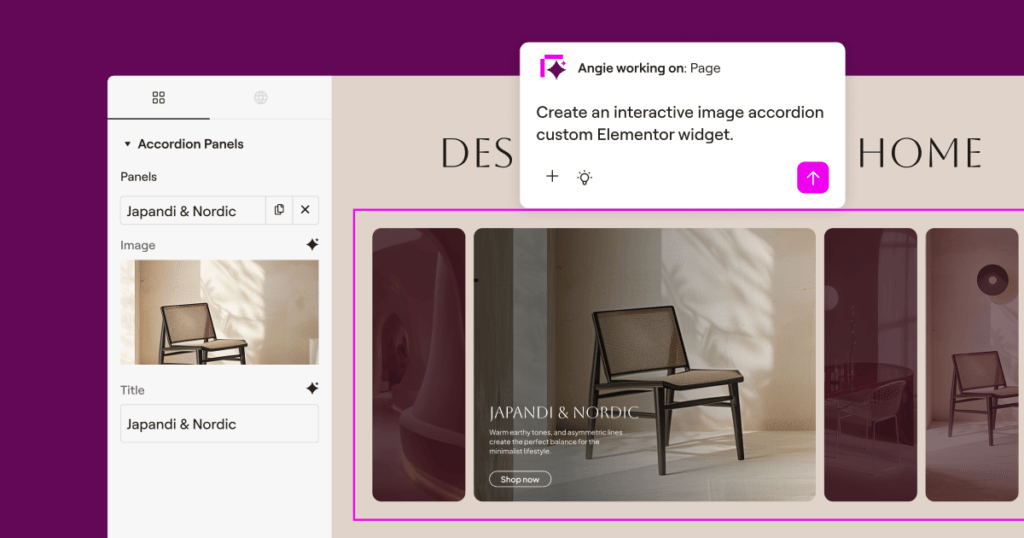
- Inside the Editor: AI-powered widget creation via natural language for building custom widgets.
- Across the broader environment: a Native AI Layer for WordPress to create full components and landing pages, and provide a “native generative infrastructure” to manage your entire website.
When a vendor talks about a “native generative infrastructure” to manage your entire website, you’re no longer buying a builder plugin. You’re adopting an application platform with an AI control layer-and likely, another place where credits can be spent.
Editor V4: Atomic Editor (CSS-first) could be real progress-if it stays portable
Elementor also announces it is “preparing to launch” Editor V4: the Atomic Editor, described as a complete reimagining built on a “professional CSS-first framework.” It introduces Atomic Components as modular, lightweight building blocks focused on performance and cleaner code, plus design-system features like global Classes and Variables.
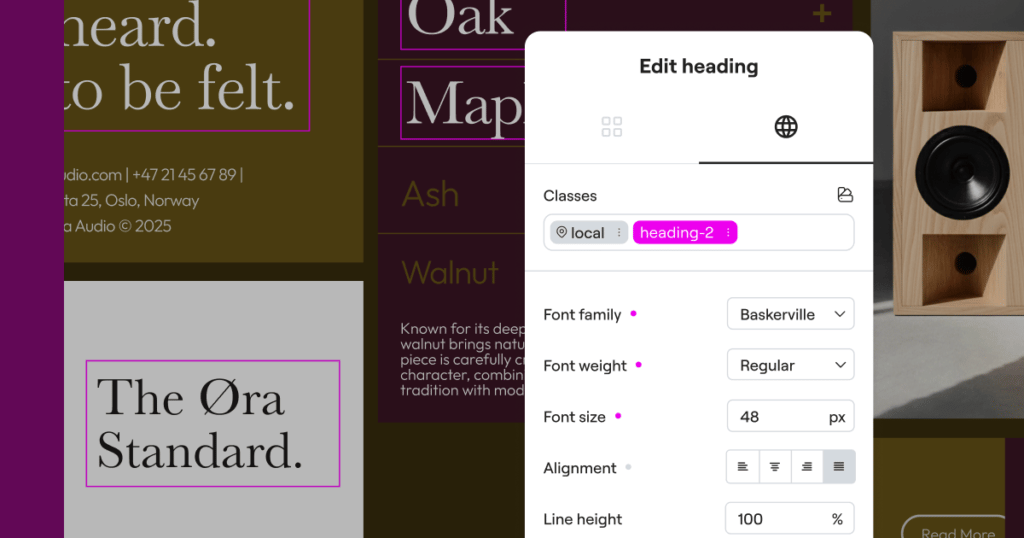
A CSS-first, performance-oriented architecture is welcome. The risk is that the better the internal design system gets, the more expensive it becomes to migrate away-especially if the “atomic” abstractions don’t translate cleanly to core WordPress blocks or other front-end stacks.
What about existing users? “Won’t be impacted” is not a long-term guarantee
Elementor states: “Your current subscription won’t be impacted. You can continue using your plan exactly as it is.” And then immediately encourages upgrading to One, with “special, limited-time discounted launch pricing.”
Even if current subscriptions remain intact today, development focus and product gravity are clearly shifting to Elementor One as the flagship. In software, “won’t change” is often true-until it isn’t. The bigger question is where engineering effort, roadmap priority, and innovation will concentrate once the subscription bundle becomes the business.
Vendor lock-in: the more you adopt, the harder it is to leave
Lock-in isn’t just about content shortcodes or template exports. Elementor One ties together multiple operational layers:
- Hosting (cloud hosting for WordPress, plus WooCommerce hosting plans).
- AI generation inside the editor (code, layouts, images) and broader “native AI layer” ambitions.
- Image optimization as a service.
- Transactional email deliverability via Site Mailer.
- Accessibility scanning and remediation tools.
- Planned Cookie Consent tooling.
- Planned multi-site management (“Manage”) with monitoring and bulk updates.
- A unified dashboard/home screen inside wp-admin that becomes the operational hub.
Adopt one or two of these, and you still have options. Adopt all of them, and you’re effectively running your WordPress business inside Elementor’s product boundaries. At that point, switching isn’t a “migration”-it’s a rebuild of tooling, workflows, reporting, and potentially costs.
A privacy red flag: Mixpanel tracking allegedly cannot be disabled (Elementor 3.34.2)
There’s an additional concern that’s not about subscriptions at all: trust. According to a WordPress.org support report, as of Elementor 3.34.2, Mixpanel tracking has become impossible to disable. The claim is that even when users explicitly opt out of data sharing with Elementor, the plugin ignores the setting and continues tracking visitors and admin activity-described as a GDPR issue.
GDPR concern to verify in your environment
If you operate in the EU/EEA (or handle EU residents’ data), treat this seriously: review your Elementor version, check cookies/requests, and document consent behavior. Source discussion: https://wordpress.org/support/topic/mixpanel-cookies-set-even-when-data-sharing-is-off-3-34-2-gdpr-issue/
When a vendor is simultaneously expanding into cookie consent tooling and broader platform control, any allegation of non-optional analytics tracking is more than a bug-it’s a governance problem. Platforms don’t just need features; they need credibility.
The real question: is this for users-or for investors?
Elementor One is being sold as less friction, more value, and a unified workflow. But the structure-bundled subscription + shared credits + integrated services + centralized management-matches a familiar SaaS playbook: increase ARPU (average revenue per user), reduce churn through lock-in, and grow by expanding horizontally across the stack.
For WordPress professionals, the decision isn’t whether Elementor One has useful features. It’s whether you’re comfortable letting a formerly “just a plugin” become the platform you depend on for core operations-and what happens when pricing, policies, or priorities inevitably change.
Practical takeaways for WordPress developers and agencies
- Treat Elementor One as a platform adoption, not a plugin upgrade.
- Model costs assuming credits will become the metering layer for more and more capabilities.
- Be cautious about moving hosting + email deliverability + optimization under the same vendor unless you’re ready for hard lock-in.
- Track roadmap signals: Cookie Consent + Manage + a “Native AI Layer for WordPress” implies deeper control of the stack.
- If GDPR matters for your business, investigate the Mixpanel tracking report for Elementor 3.34.2 and document what you observe before rolling out widely.
Patai László
I have been working with open source systems since 1999, and specifically with WordPress since 2006. My specialty is the development and operation of high-traffic websites.
All posts